

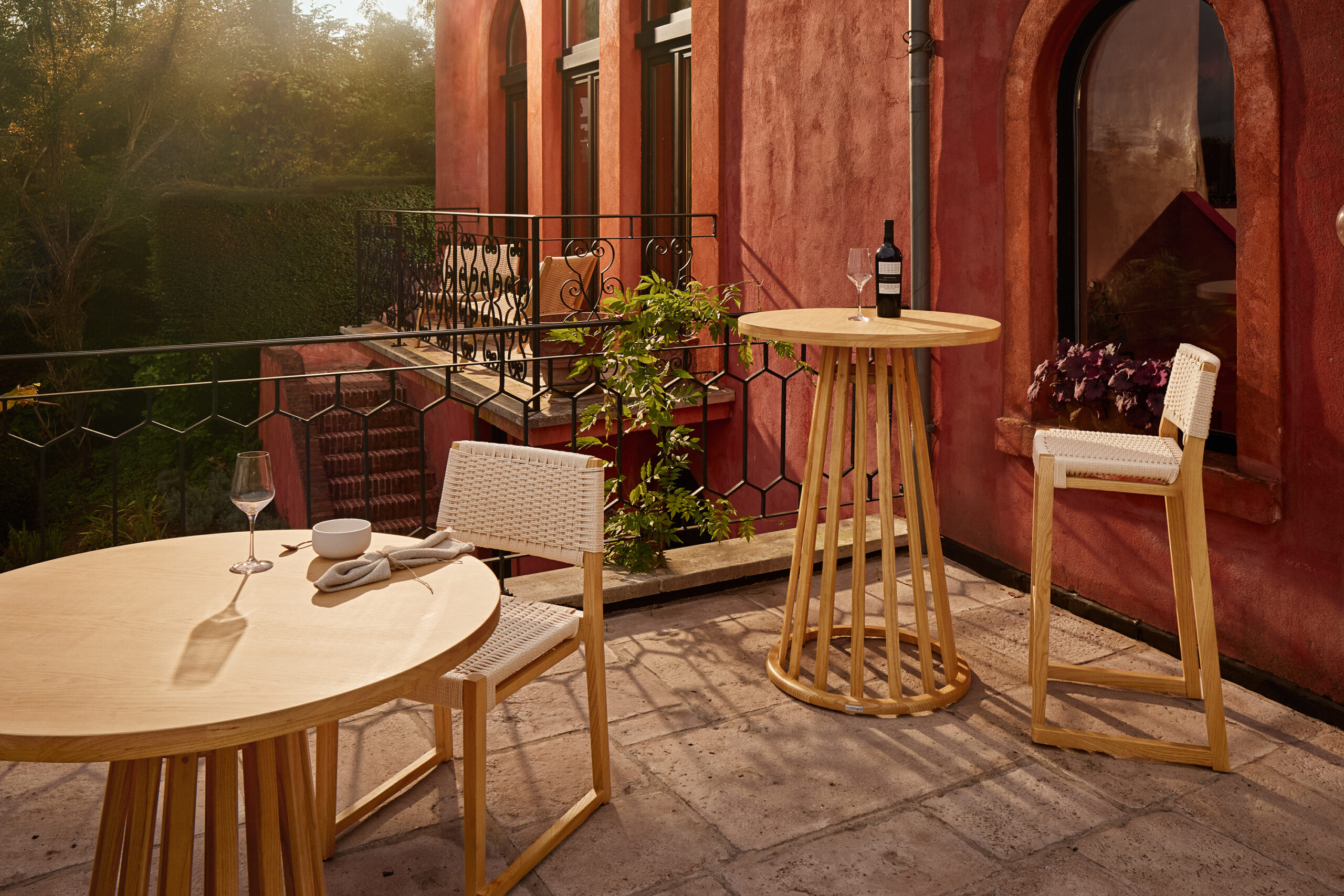
Materials always look good on day one. You only notice the real difference after a few weeks or a full season. Especially when furniture is used intensively, frequently moved and stacked, and (for outdoor use) also has to withstand sun, rain, and temperature fluctuations. That is why “indoors or outdoors” is not a detail, but a choice that determines how long your setup continues to look sleek and professional.
In this blog, we focus on one thing: Which materials are suitable for indoors and which for outdoors? We explain which materials are best used indoors, which perform better outdoors, and which can easily handle both. You will receive a clear selection guide with Flexfurn examples, so you can find the right combination for your application faster.
Inside is predictable, outside is a stress test.
Indoor use is usually stable. There is less moisture, less UV, and cleaning is often gentler. Outdoors, it is the opposite. Furniture is exposed to rain, sun, temperature fluctuations, frequent cleaning, and often extra stress from moving, stacking, and repositioning. Which materials are suitable for indoors and outdoors? This requires different materials, different finishes, and sometimes simply different expectations.
Perfect outdoors and also perfect indoors
If you are looking for furniture that can stand outside without worry, choose materials that are made for heavy use and the elements.
Aluminium frames are one of the most logical choices here. Aluminium is lightweight to handle, strong for daily use, and does not rust. This makes it ideal for terraces, outdoor hospitality, and event settings where you frequently rearrange, want to convert quickly, or often deal with stacking and transport logistics.
Plastics such as polypropylene or polyethylene are strong for outdoor use. They are UV- and water-resistant and low-maintenance, which is particularly interesting when furniture needs to keep up with a fast workflow. Think of situations where you want to set up quickly, clean quickly, and store efficiently.
Compact HPL tabletops are a safe choice when you are looking for a top that can take a lot. It is weather-resistant, robust, and made for intensive applications where a tabletop is used and cleaned daily. If you want to work outdoors without stress about moisture and changing conditions, compact HPL is one of the most reliable options.
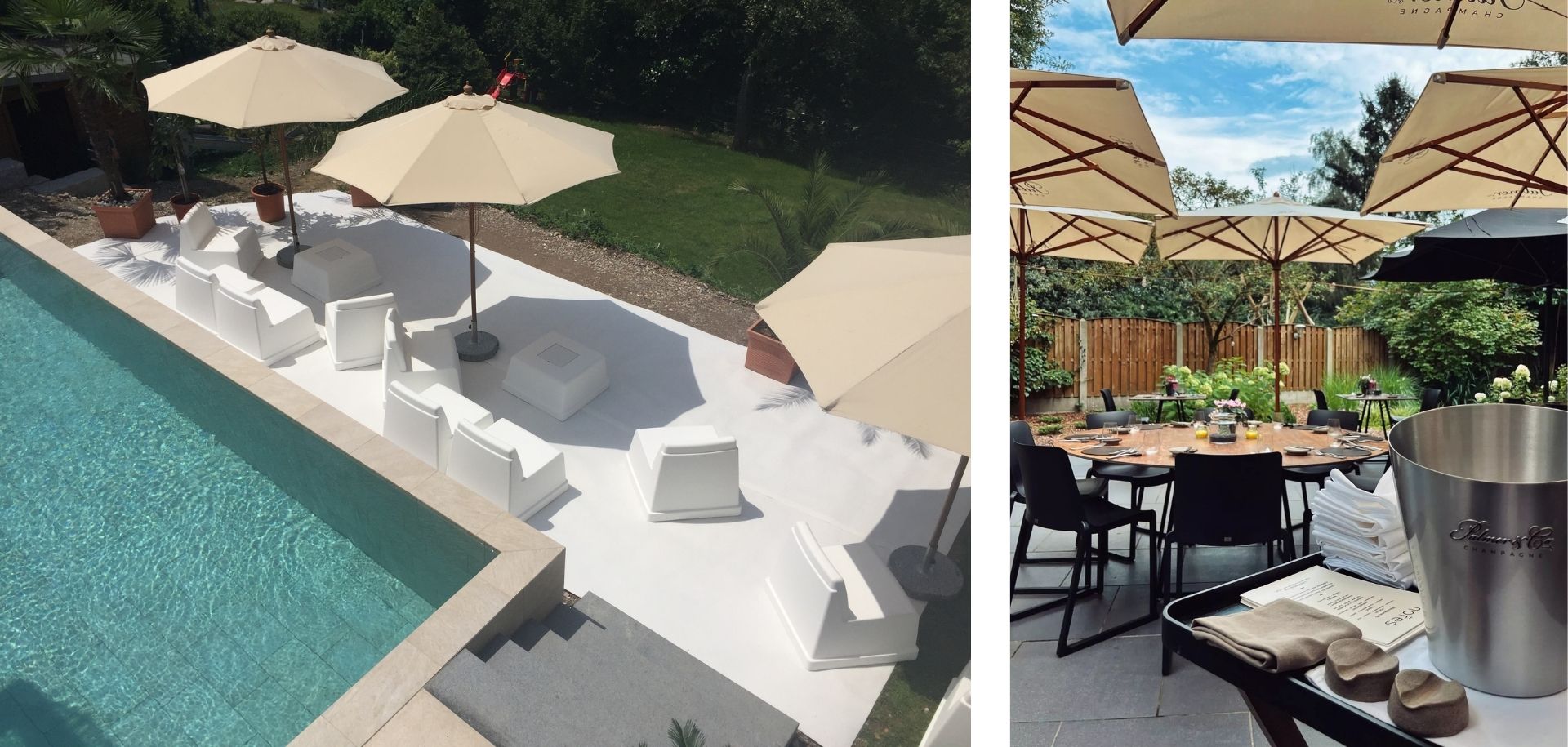
In outdoor collections such as Conic, Linea, Flow and Vase You will find tables and tabletops designed for outdoor use. That is precisely why they also work perfectly indoors, for example in a hotel setting or indoor event space where you want to extend the same look without compromising on ease of use.
Preferably inside, not outside
For indoor environments, you have more freedom. Here, choices are often based on look, comfort, and a neat, consistent appearance. Think of meeting rooms, businesses, and indoor events, where furniture primarily needs to be presentable and less exposed to extreme conditions.
However, it is better to keep some tabletop materials away from rain and moisture.
Melamine-coated particle board is practical and sleek for indoor settings, but sensitive to moisture. If water can penetrate through the edges or the core, the board may swell over time. This is not a problem when used correctly indoors, but it is a risk when placed outdoors in varying conditions or stored outside.
Core laminate is similar. The top layer is strong, but the core remains more susceptible to moisture. As a result, this is primarily a safe choice for locations where the climate remains stable and furniture is not continuously exposed to rain or temperature fluctuations.
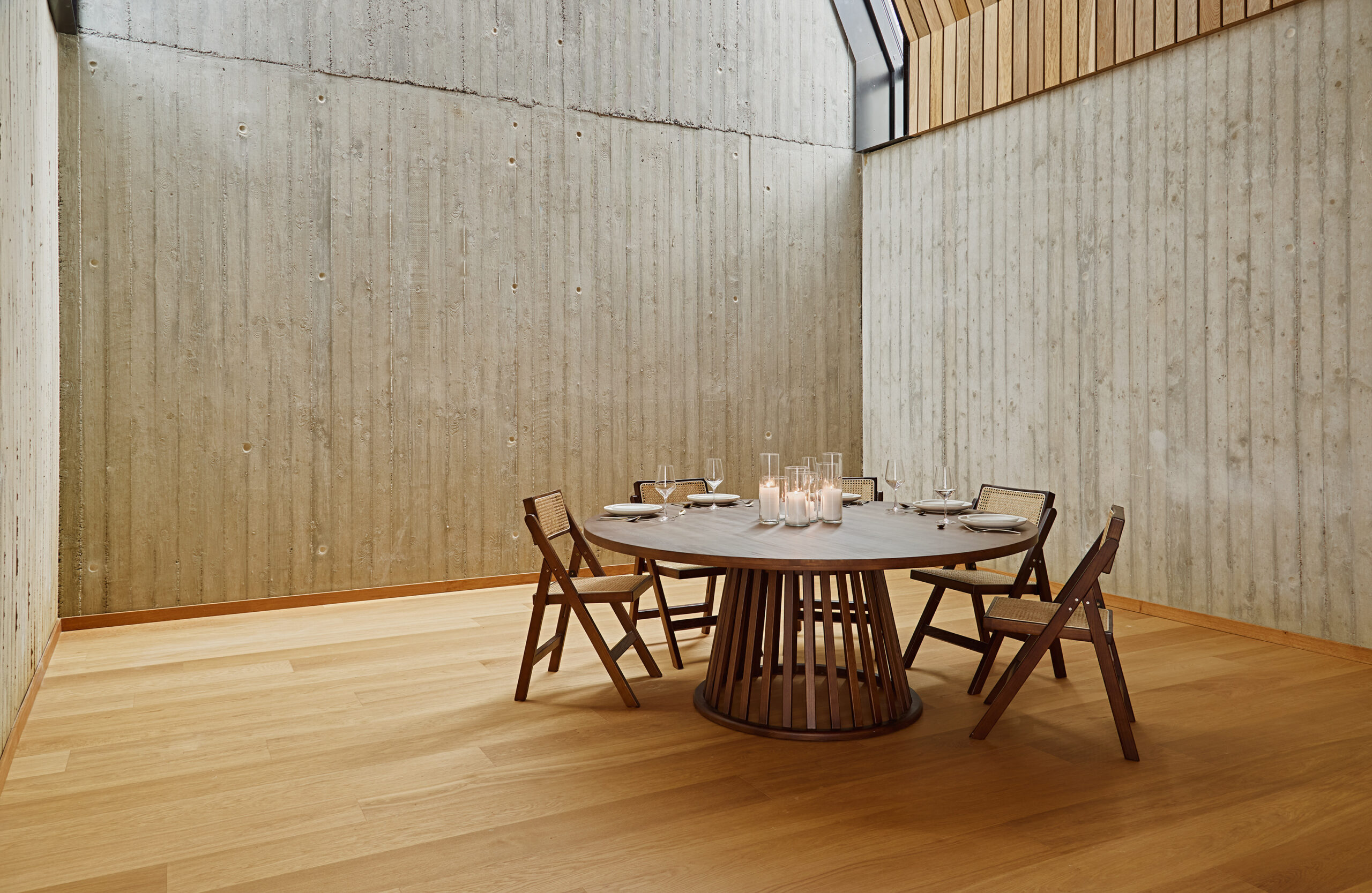
Collections and models primarily focused on interiors fit well within that indoor context. Think of Mundi for a warm, wooden table look, Alice when you are looking for a sleeker steel character, and chairs like Nina, Teddy, Crossback and Tolix Style for a consistent look in meeting rooms and companies.
Being outdoors is possible, but with care.
Some solutions can be used outdoors but require a bit of routine. Powder-coated steel, for example, is very sturdy and ideal for intensive use, especially in an event context where furniture has to withstand a lot. The coating is crucial here. A scratch may seem small, but it can eventually cause rust if moisture finds its way to the metal.
Therefore, the best approach is simple: choose powder-coated steel when you need robustness, but schedule a quick check of the contact points every now and then (especially during stacking and transport). Repairing damage promptly makes a noticeable difference in lifespan and appearance.
Galvanized steel is another material that performs well outdoors. The steel is coated with a layer of zinc that protects against rust, and in the event of minor scratches, the zinc “sacrifices” itself so that the steel underneath remains protected. As a result, it is resistant to rain, moisture, and temperature fluctuations, and often offers protection for decades in a normal outdoor environment (garden, patio).
It is important to know, however, that the lifespan is shorter in aggressive environments such as coastal areas or industrial zones. Cut edges and drill holes are vulnerable spots that can be touched up with zinc spray. Aesthetically, the material may become somewhat duller or greyer over time due to patina, and it is best to avoid contact with other metals such as copper to prevent unwanted corrosion. For outdoor furniture, frames, and structures, galvanized steel remains a solid and cost-effective choice, as long as you take the environment and the finish into account.
next step
Are you still undecided between two materials, or do you want a setup that works for your sector and workflow? Then it pays to look at the big picture: how often you change over, how you store, and how much maintenance you realistically want to do.
FAQ
Which materials are most suitable for outdoor use?
Aluminium, UV- and water-resistant plastics, and tabletops such as compact HPL are the most carefree for outdoor use.
Can I leave furniture outside all year round?
That depends on the material and storage. Outdoor-proof materials can handle a lot, but storing them dry or covering them always extends their lifespan.