

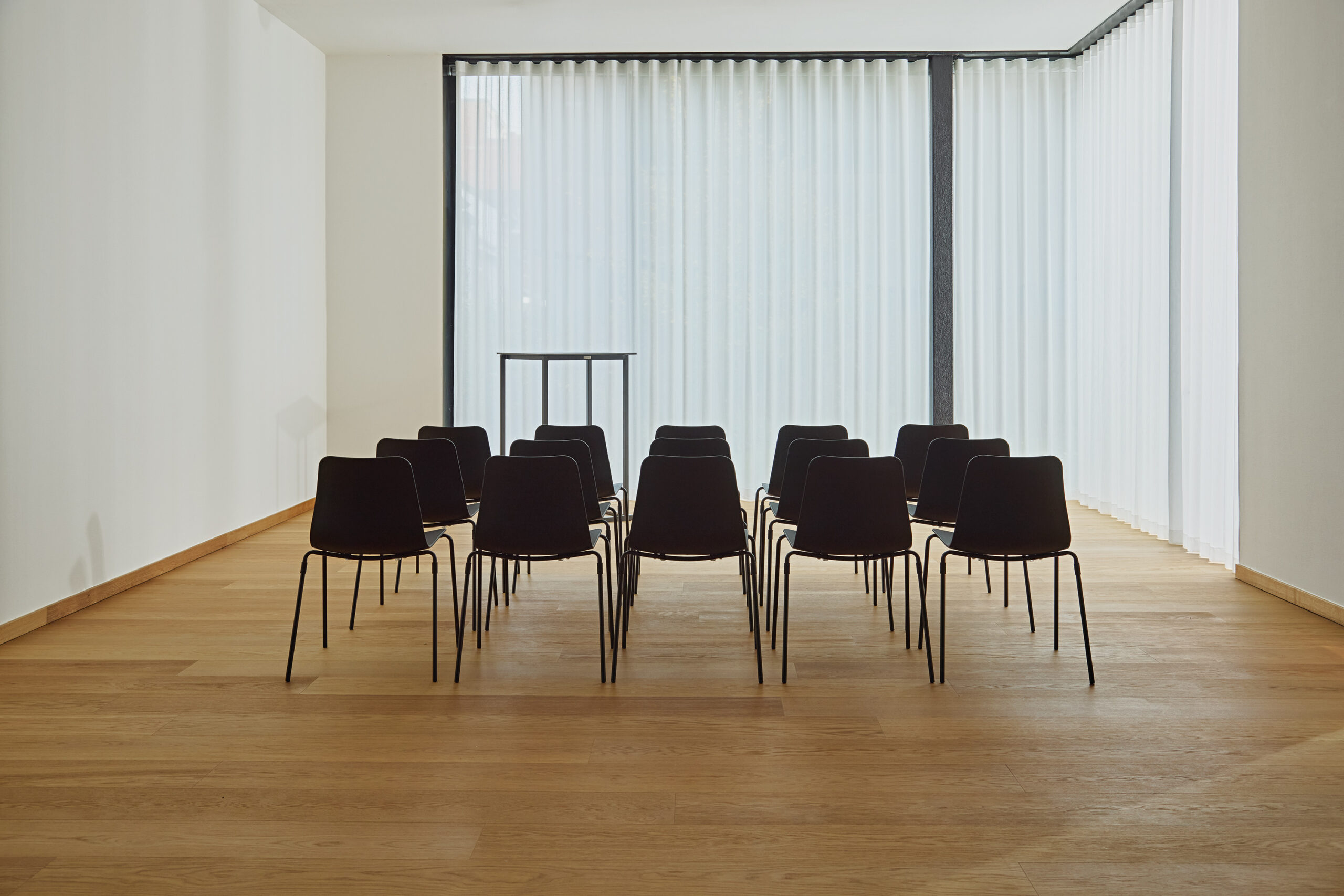
No one comes for the chairs, but everyone notices if they are not comfortable sitting on them. A messy layout, a setup that takes too long, or chairs you want to get up from after just an hour. Visitors don't say anything about it, but it does stick in people's minds. The design of a conference hall therefore has more influence than you might think at first glance.
The challenges a conference organizer may encounter
A conference attracts many people, and they need to be able to sit comfortably all day long. The program changes constantly: from a large plenary session to a workshop, and then back to a group discussion. Each time, the room must be reconfigured within fifteen minutes, while a team moves chairs, tables, and trolleys under time pressure. The furniture you choose determines whether this runs smoothly or turns into a stressful experience.
Because comfort is not a detail. Visitors sometimes sit for a whole day, and a chair that becomes uncomfortable after just two hours is distracting. A good “8-hour chair” ensures that attention remains on the content, not on the discomfort. And the lighter and easier the furniture is to move, the less people and time you need for each rearrangement. That saves not only effort, but also money.
Which constellations do you need?
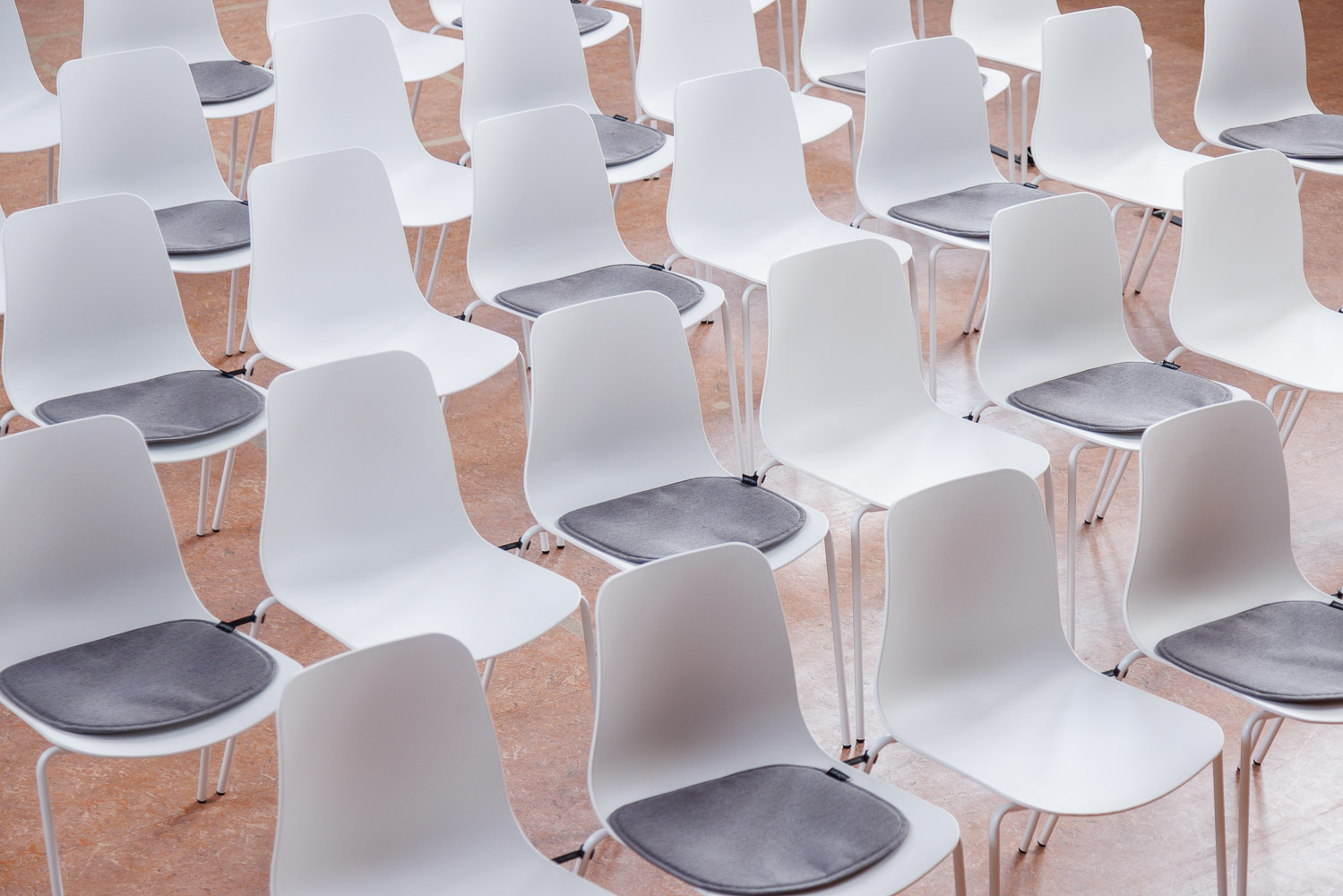
The layout of your room determines how a session proceeds. For most conferences, you end up with four setups.
In a theater setup, you place chairs in rows facing the stage, without tables. This provides the most seating. Ideal for plenary sessions with large groups.
In a banquet hall setup, you work with round tables distributed throughout the space. Participants sit in groups of six to ten people, which promotes networking and informal discussion during meals or breaks.
In a boardroom setup, all participants sit around one large central table. This works well for smaller conference meetings or board sessions of up to about twenty people, where everyone needs to have an equal opportunity to speak.
For parallel sessions or workshops, set up breakout rooms with smaller tables and chairs that can be moved quickly. This enables interaction and group work without disturbing the quiet of the main hall.
Flexibility is not a luxury, but a requirement. A hall that can only accommodate one layout is a hall that limits you.
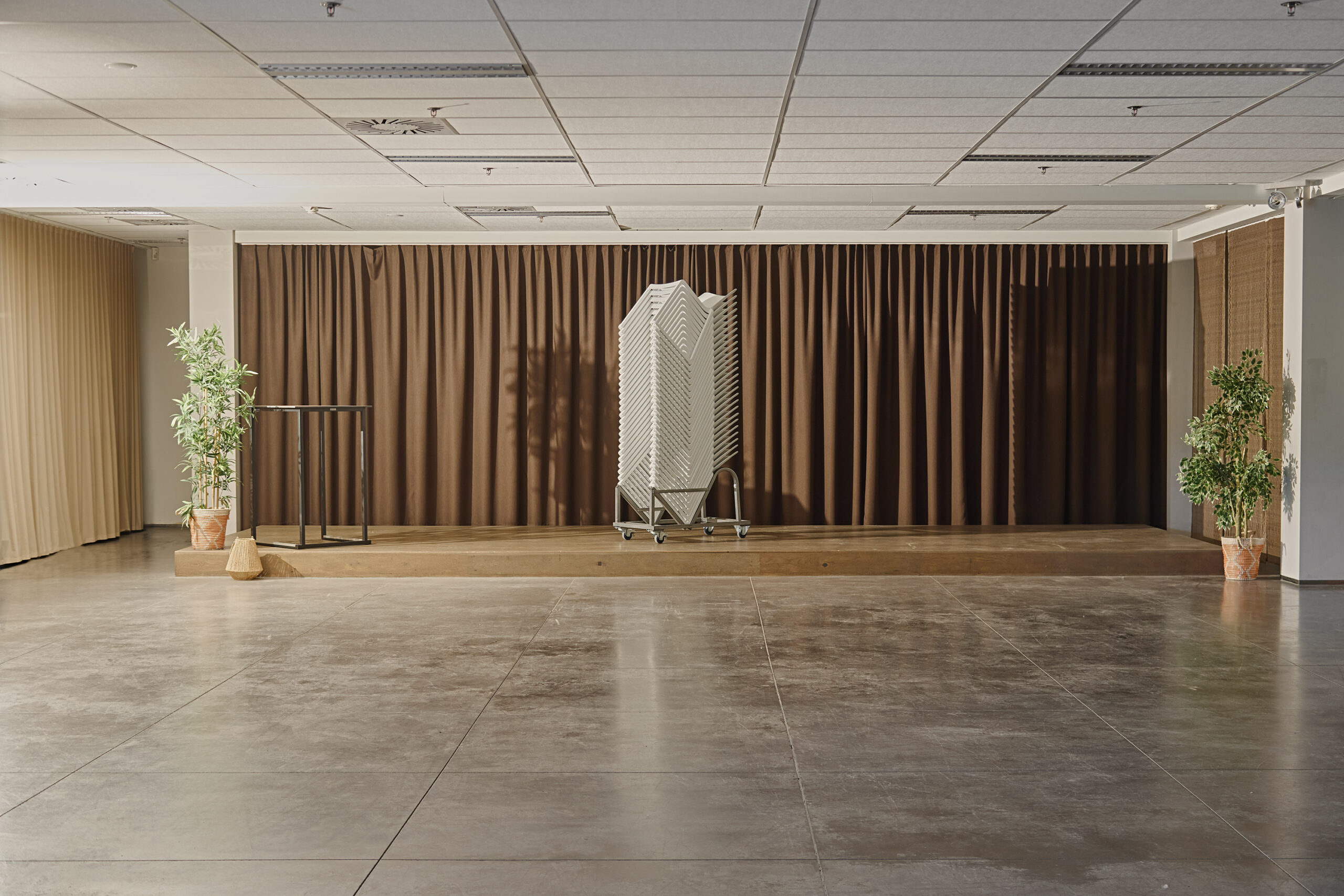
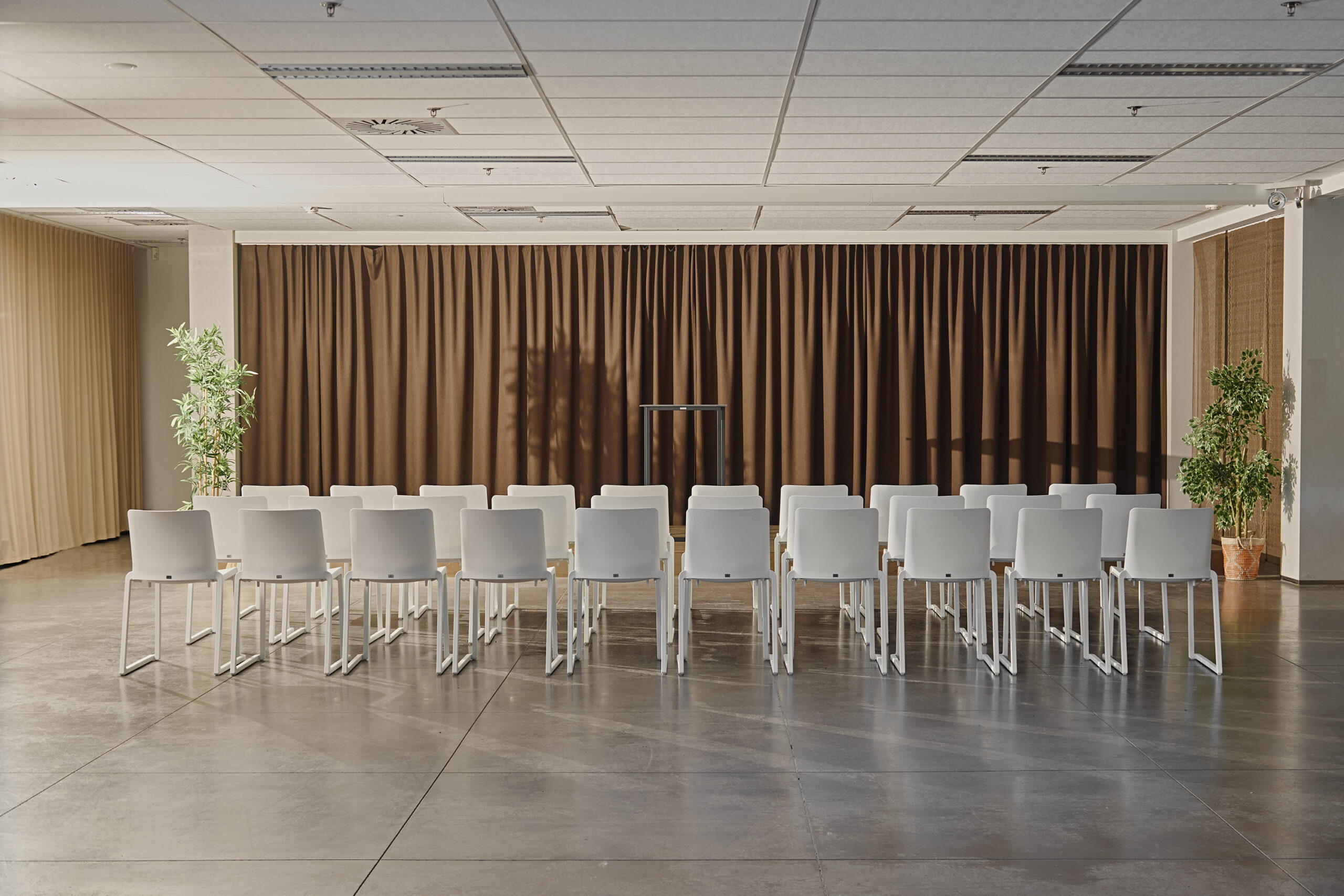
The right furniture for conference rooms
The choice of furniture determines how quickly you set up, how comfortable participants sit, and how professional the overall appearance is.
Chairs
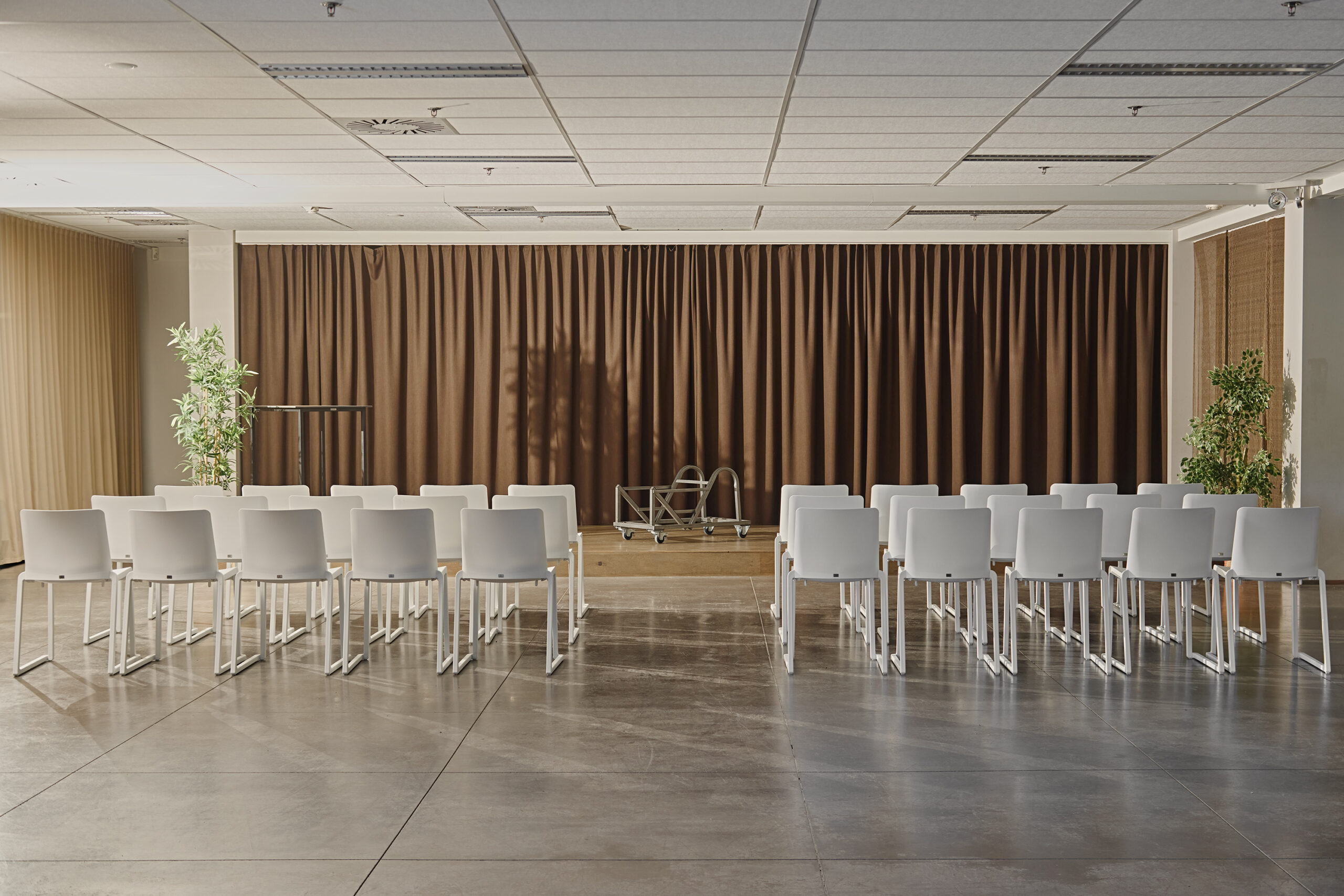
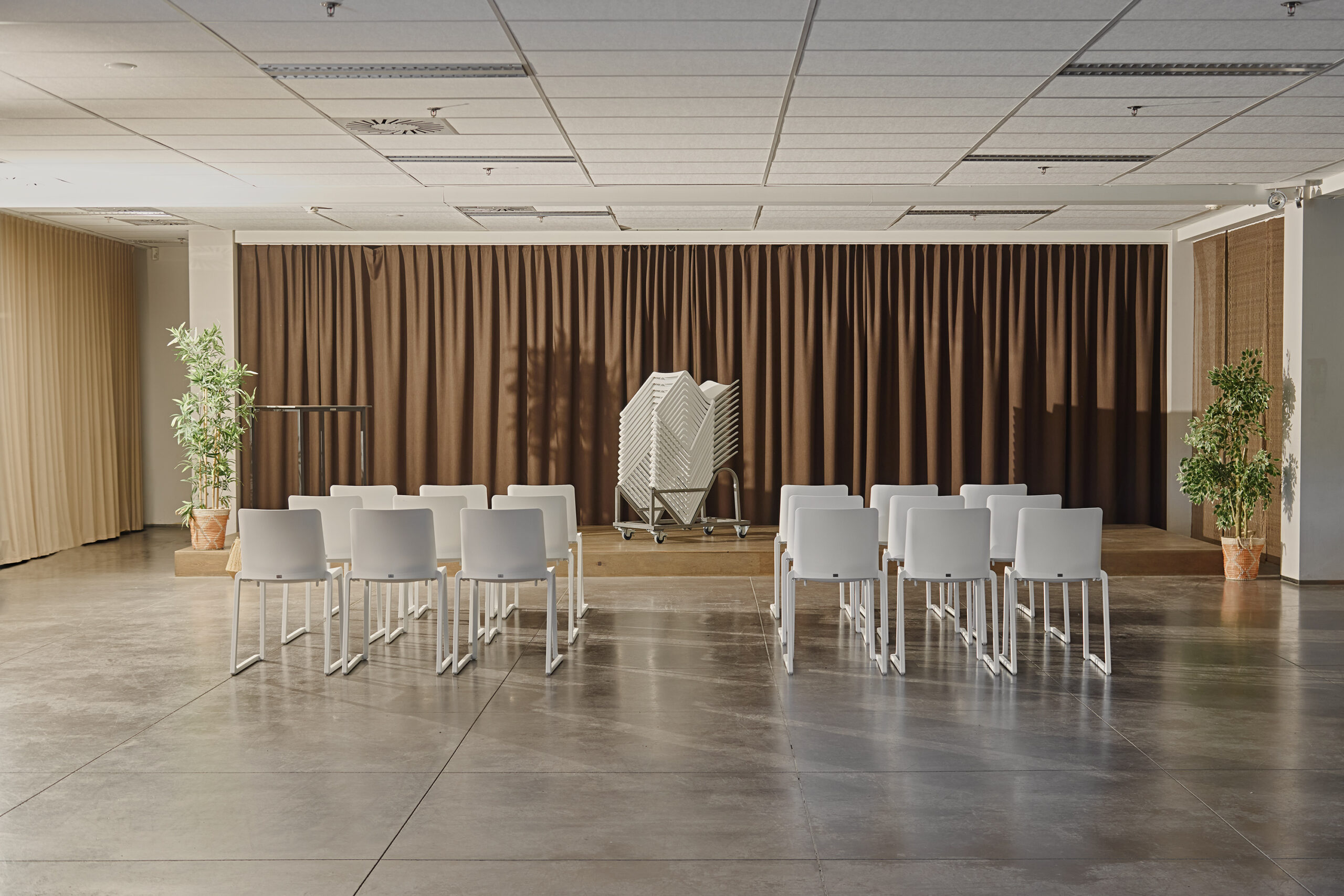
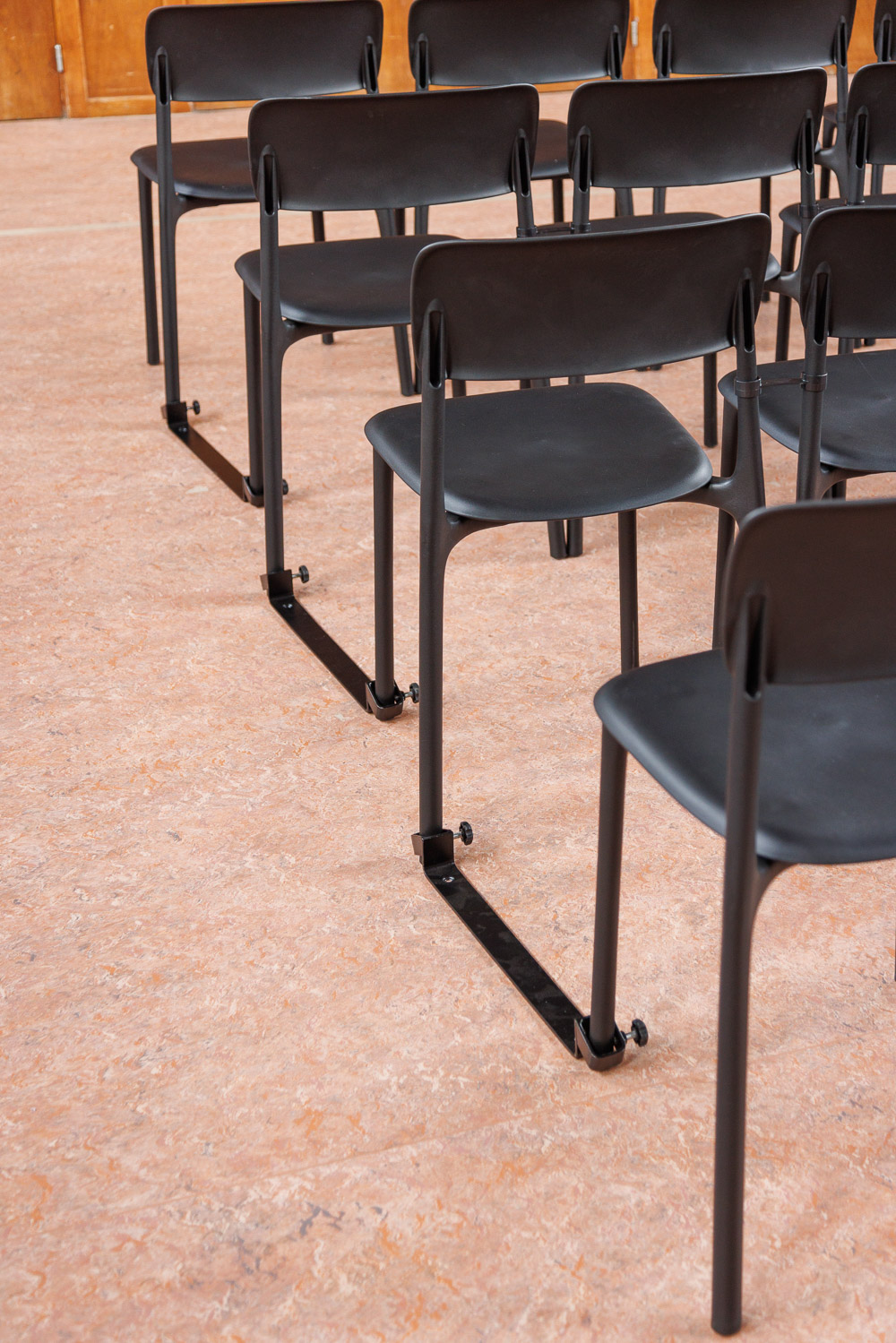
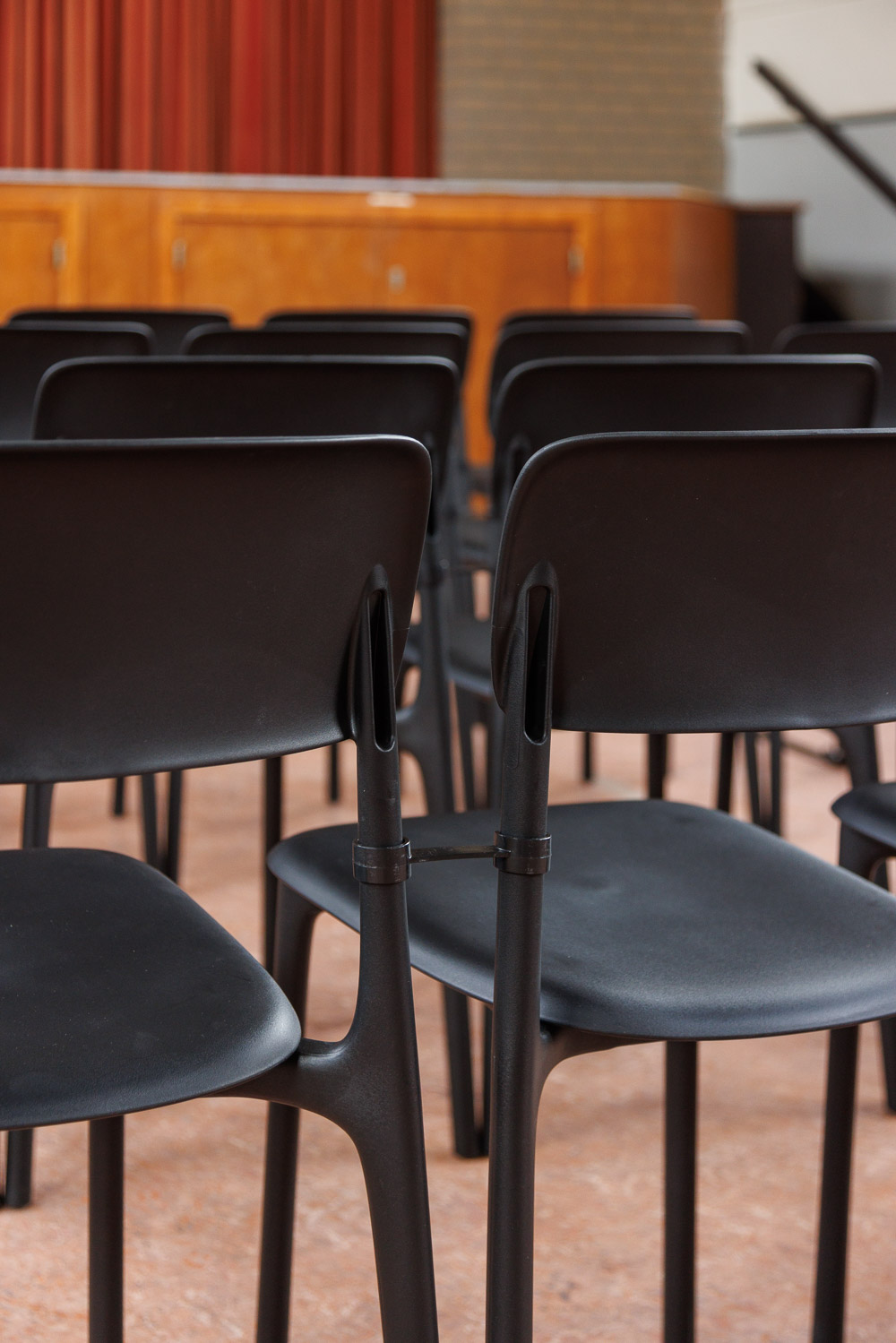
Three things make the difference. How high can you stackingWith 10 to 15 chairs stacked on top of each other, you only need a few square meters of storage for 200 units. How heavy is a chair? You can pick up a 3.5 kg model with one hand; you cannot pick up a 7 kg one, and you notice that when you move hundreds of them. And can you link the chairs together? Linked chairs stay neatly in place, aisles remain clear, and for large groups it is also safer—in many cases even mandatory.
At Flexfurn, all conference chairs are: the Curvo, Pepper, Kasar, Teddy and Veneto, and others equipped with couplers and row connectors with which you connect rows quickly and securely.
Tables
A folding table Opening one with a quick movement might only save ten seconds. But do that a hundred times and you gain fifteen minutes. If you choose tables that can be combined in various configurations, it becomes even more convenient: the same set becomes a long conference table, a few separate workstations, or a registration desk, without extra equipment.
Transport and storage
Transport carts Transporting 10 to 15 stacked chairs at a time reduces the number of trips and protects the equipment. Store chairs directly on carts instead of loose on the ground; this saves a step during every setup. The same applies to tables: choose models that are easy to stack or foldable so you can quickly store and move them without taking up much space. A good table transport cart makes the difference between a quarter of an hour and half an hour for setup.
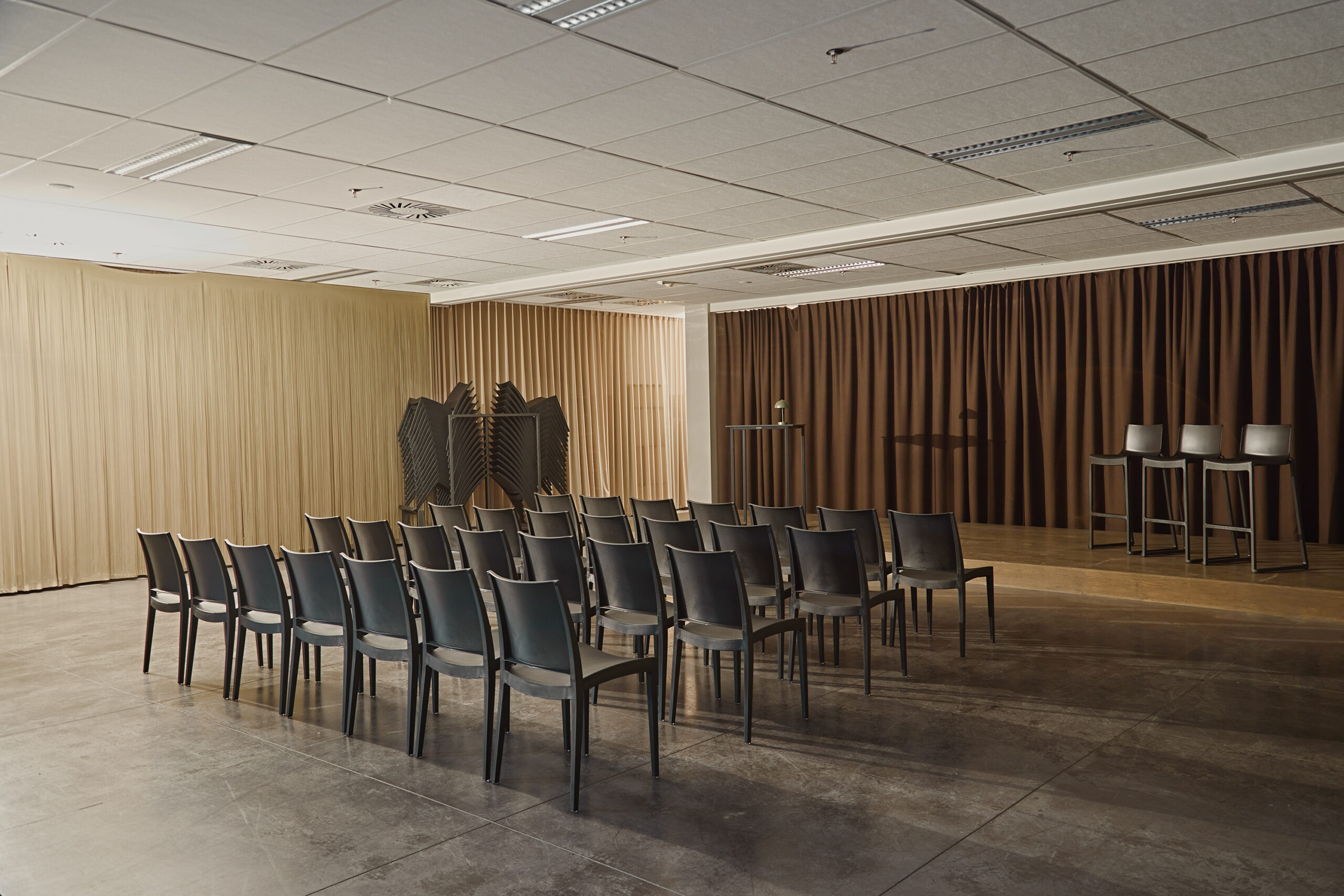
Efficiency, appearance and comfort
Setup time costs money, both in staff and venue rental. If your venue needs to be reconfigured three times a day, lighter and more manageable furniture can easily save you an hour and a half. Place storage as close to the venue as possible and use carts that can carry a lot at once, and you will also save a lot of walking back and forth.
A room looks professional when everything is just right: chairs neatly lined up, tables aligned, and aisles that are easy to walk through. And don't forget comfort; visitors easily sit for six to eight hours on a conference day. Chairs with good back support and the correct seat height ensure that people remain seated even after lunch.
Furnishing a meeting room: from a static office to
multifunctional meeting room
Five practical tips
1. Work with fixed room plans. Create a detailed plan for your most frequently used layouts. Print them out and hang them in the storage room; the team no longer needs to improvise.
2. Use numbered zones. Divide the room into zones (A, B, C) and number the rows. “Row A3 to A8 to storage” is faster and clearer than “those seats in the back left.”
3. Plan the transition in advance. Walk through the transitions between sessions as if it were a rehearsal. Where does it get stuck? Where is extra staff needed?
4. Choose multifunctional furniture. A chair suitable for both a conference and a dinner saves duplicate investments and storage space.
5. Evaluate afterwards. Ask the setup team what went well and what could be improved. They see what the organizer does not see.
furnishing a meeting room
FAQ
Which seats are easiest to link together in tight rows?
At Flexfurn, chairs suitable for conferences are easy to connect. The Curvo, Pepper, Kasar, Teddy, Veneto and more, all have legs that you quickly and securely connect to each other with connectors. This keeps your rows straight and your aisles clear, even with hundreds of seats.
What is the advantage of stacking chairs over folding chairs for a conference?
Both are practical, but they each have their own strong points. Stacking chairs are quicker to set up and often offer more seating comfort during longer sessions. Folding chairs take up less storage space and are ideal when working with limited storage. For large conference halls where both comfort and quick setup are important, stacking chairs are usually the best choice.
Can I see in advance what my conference room looks like with Flexfurn furniture?
That is possible. Flexfurn offers 3D simulations that allow you to try out different layouts before a single chair is placed. This way, you see exactly how many chairs and tables you need and how the space is best utilized.